 blog
blog When is relighting not possible in a commercial building?
You want to light your commercial building more efficiently, but is this possible without major renovation works? In many buildings this depends less on the luminaires and more on the building itself: ceilings that cannot be opened, electrical installations that are not cooperative, or safety requirements that make everything more complex. In this blog you will read about 5 obstacles that make relighting impossible, and which solutions can still deliver energy savings.

1) The infrastructure does not allow major works
In many commercial buildings, the lighting is integrated into ceilings, cable trays, technical shafts, or existing constructions. Sometimes there is simply no space for new surface-mounted fixtures, or the existing cabling is not suitable for renewal.
In that case, relighting involves more than just replacing luminaires. You also touch the power supply, control system, fire compartments, or finishing. This is precisely where the cost or impact can become disproportionate.
In these situations, at Multiline we start with a technical quick scan per zone: what can you keep, what must be adapted, and where do you achieve the largest gain with the smallest intervention?
2) Ceiling build-up or load-bearing structure blocks installation
Relighting is only feasible if you can install luminaires safely, correctly, and according to plan. In commercial buildings we often see lighting in suspended ceilings with limited fixing points, or structures that are not designed for a new layout of lighting points.
Thanks to our in-house production, we can produce lighting tailored to your ceiling. In addition, a good lighting design also helps with relighting to quickly select alternatives for zones with constraints (without having to redesign the entire project).

3) Production continuity: downtime is too expensive
This is the biggest showstopper. In production, logistics and critical office environments there is often no room for long renovations on the work floor. Relighting then requires an approach that fits somewhere between shifts, safety, and accessibility.
If you cannot work with sufficient time windows, temporary zones, safe site organisation and tight phasing, relighting becomes practically impossible.
In this case, Multiline supports the end customer and installer with a phased upgrade: first tackle zones that are easier to shut down (e.g. circulation areas, meeting rooms, warehouse aisles), and then continue in short interventions.
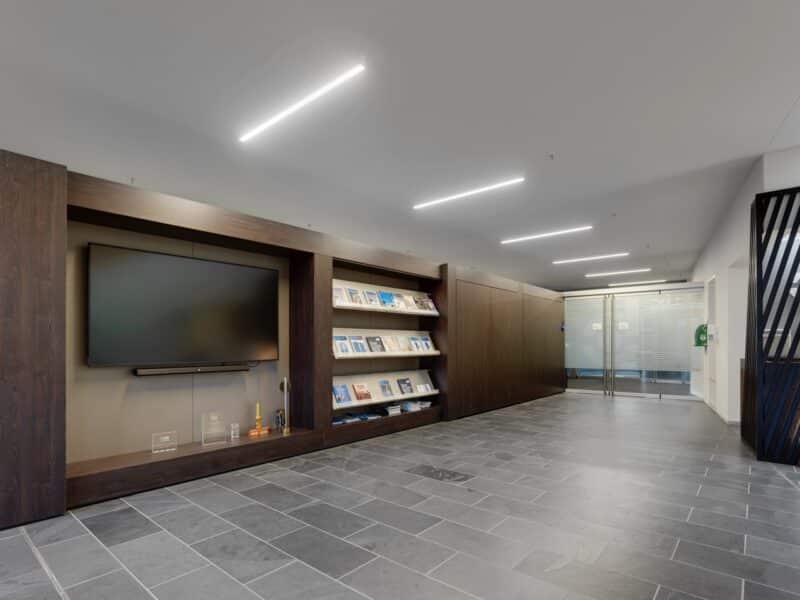
4) Safety requirements make 1‑to‑1 replacement impossible
Safety is always a factor in commercial buildings: emergency lighting, escape route logic, presence of dust/moisture, cleaning regimes, ATEX environments, hygiene zones… Sometimes you cannot simply replace the existing system without additional measures or re-certification.
Relighting then becomes a safety dossier rather than just a lighting dossier. In such cases, start from compliance: map out the requirements per zone and then determine which lighting upgrade fits within those frameworks.
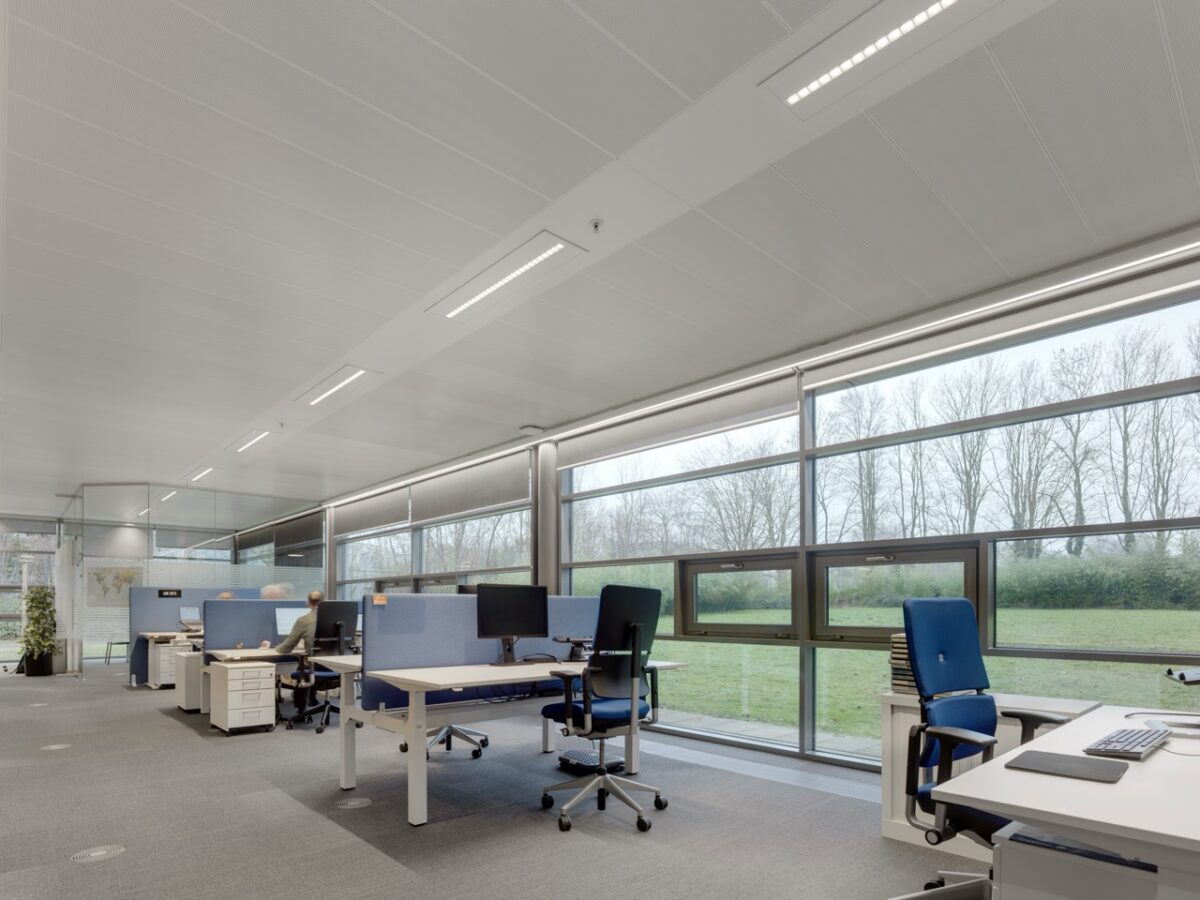
Donaldson also added extra options for safety and ease of use in their relighting project.
5) Aesthetic or structural restrictions
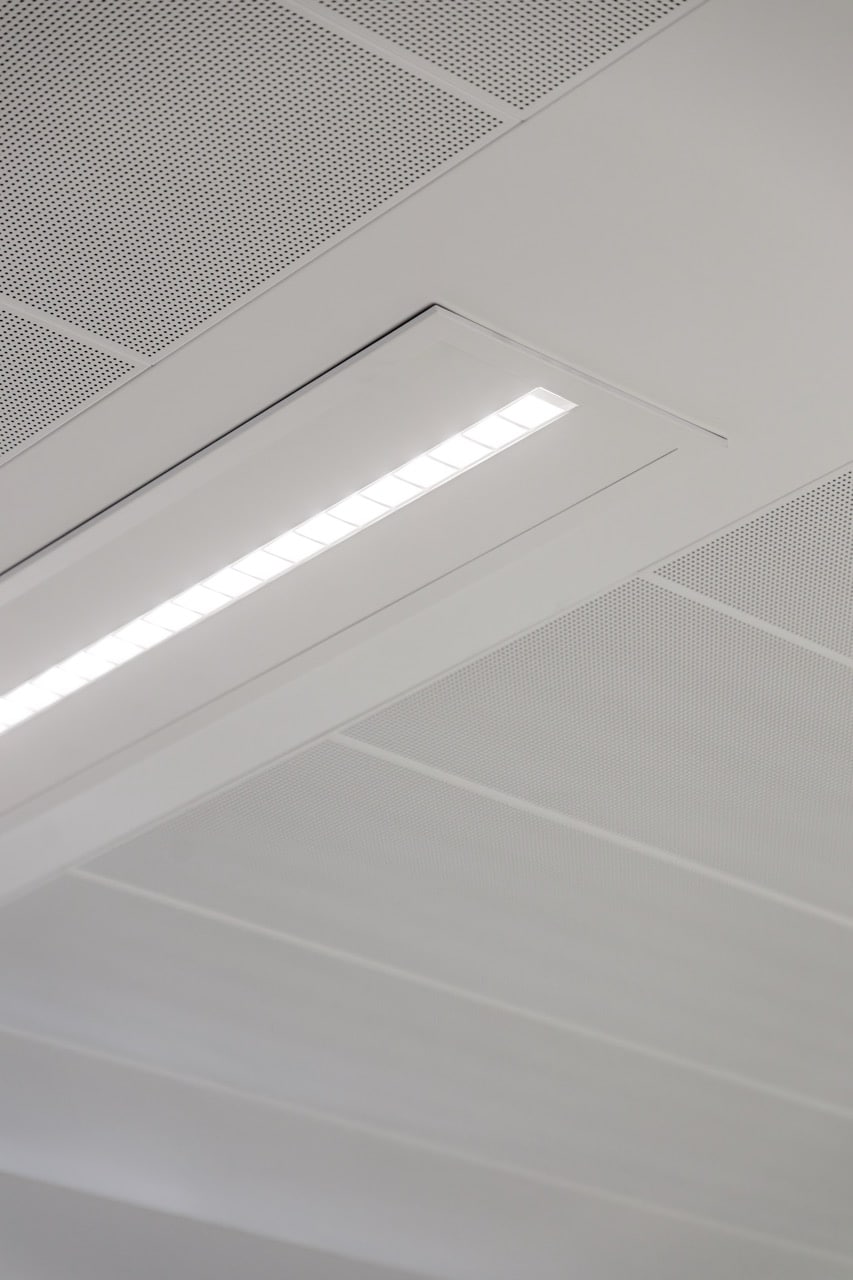
In commercial buildings, aesthetics and architecture can limit relighting: sightlines, representative entrance areas, ceiling islands, technical ceilings, or integration with other building services. Sometimes the solution must not be visible at all, or it must follow a specific rhythm.
Standard solutions can rarely respect this. With (architectural) custom-made lighting you do not have to accept compromises that continue to bother you afterwards.
Refitting as an alternative to relighting
If relighting (replacing everything) in your commercial building is not feasible, refitting can be a good alternative. With refitting, you keep the existing housing or mounting (where technically possible) and renew the internal components, such as the light source, driver, and possibly optics. This improves energy consumption and light quality with far fewer interventions to the ceiling, cabling, and finishing.
Refitting is particularly interesting when the infrastructure imposes limitations or when you want a quick upgrade without having to completely rebuild the lighting installation.
Read more about refitting vs. relighting.
Refitting or relighting in your commercial building?
Multiline is happy to think along with you based on your reality: the infrastructure, planning, safety frameworks, and use of the spaces. Are you looking for more efficient lighting for your commercial building?
Get in touch, and together we will determine which approach delivers the most progress today.
Looking for inspiration?
Do you have questions? Would you like more information about our products?
Contact usMore news
-

Light lines connecting old and new at WeForm group practice
In the heart of Herselt, a traditional house was thoroughly renovated and extended to create a group practice. With the architectural concept “The Shadow”, a new composition emerged in which the new volume appears to embrace the old one. Multiline delivered the lighting design and produced a bespoke architectural lighting solution.
Read more -

“As a lighting architect, you bring technology and aesthetics together”
As a lighting architect, Lieze translates the plans and ambitions of clients, architects and engineering consultancies into lighting proposals that are both technically sound and aesthetically refined. That is why she values an environment in which quality comes first. “The best thing about my job? The variety. Because so much of our work is bespoke, no two days are ever the same.” In this blog, she explains why she is so proud of her work at Multiline.
Read more -
How does Multiline design bespoke lighting for projects?
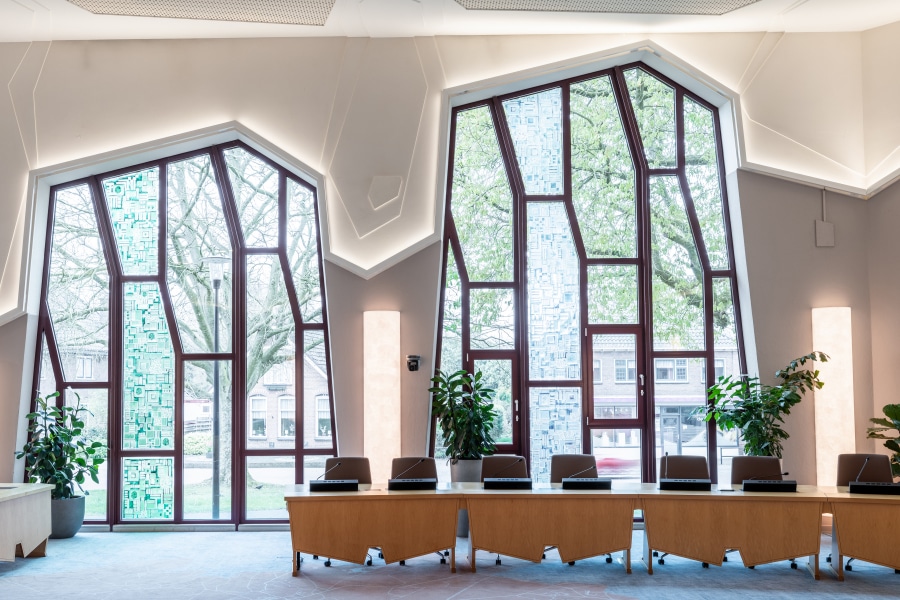
A luminaire that integrates naturally into the ceiling rhythm, with a precise finish and light output perfectly tailored to the space… The result often appears self-evident. Yet behind the scenes, bespoke lighting for projects is considered down to the millimetre. In this blog, you will discover how we at Multiline design custom solutions that fully align with both the architectural concept and on-site execution.
Read more