 blog
blog Custom architectural lighting: when standard luminaires aren’t enough
Architecture requires harmony, and that’s especially true for lighting. For those seeking seamless integration of light into a design, custom architectural lighting is the answer. At Multiline, we combine aesthetic insights with technical expertise, ensuring that lighting is not only functional but also visually enhancing. In this blog, we’ll show you how our custom lighting solutions blend seamlessly into unique architectural creations.

What is custom architectural lighting?
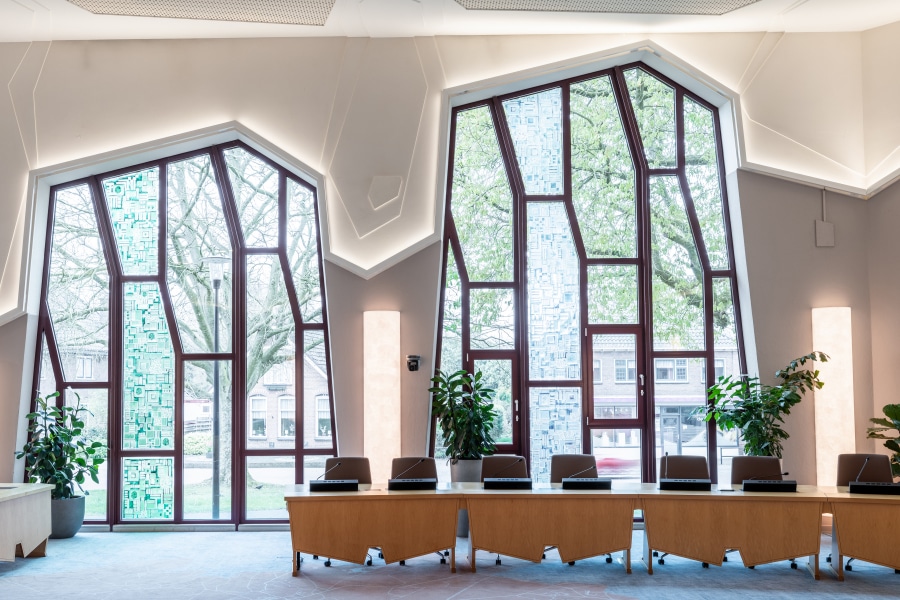
Custom architectural lighting refers to lighting solutions that aren’t simply added to a building, but instead become an integral part of its architecture. Think of luminaires that follow the lines of the ceiling, lighting profiles that align perfectly with wall modules, or lights discreetly integrated into acoustic panels or balustrades.


Such solutions are never ready-made. They demand careful collaboration between architect, installer, lighting designer, and manufacturer. Multiline serves as a bridge between all these parties : we translate the architect’s vision into a lighting solution that is both technically feasible and visually compelling.
The advantages of a custom-made approach
Custom lighting solutions offer not only aesthetic freedom but also enhance the quality of the lighting experience. Our products are tailored to the specific space, with attention to light color, distribution, and mounting methods. The result is a cohesive whole in which light performs exactly as it should – while also complementing the building’s overall character.
Moreover, customization provides flexibility. Whether it’s a technical space with specific lighting demands, an office environment with strict requirements for ergonomics, acoustics, and visual comfort, or a public hall that requires a warm and inviting atmosphere, our custom solutions can accommodate any setting.

Our working method
At Multiline, we manage every custom lighting project from concept to installation. We begin by carefully analyzing the building and the design plans. Then, we develop a technical proposal that perfectly balances aesthetics with functionality. Our in-house production ensures optimal flexibility with dimensions, materials, and finishes.
With our experience in projects for architects, contractors, and installers, we know how to identify and address potential challenges. We proactively consider integration, mounting, and connectivity, ensuring not only a seamless installation process on-site but also a final result that beautifully enhances the architecture.

When should you choose custom architectural lighting?
Custom architectural lighting is the ideal solution when:
- The design calls for a seamless integration of light.
- Standard sizes or configurations don’t meet the requirements.
- Aesthetics are just as important as light quality.
Lighting is more than just technology. It’s a vital part of the architecture. That’s why we aim for solutions that stand out when needed, or blend seamlessly into the overall design.
From concept to lighting: make your design complete
We enjoy collaborating on projects where light and space tell a unified story. Contact our lighting consultants to discover how custom architectural lighting can elevate your design.
Looking for inspiration?
Do you have questions? Would you like more information about our products?
Contact usMore news
-

Light lines connecting old and new at WeForm group practice
In the heart of Herselt, a traditional house was thoroughly renovated and extended to create a group practice. With the architectural concept “The Shadow”, a new composition emerged in which the new volume appears to embrace the old one. Multiline delivered the lighting design and produced a bespoke architectural lighting solution.
Read more -

“As a lighting architect, you bring technology and aesthetics together”
As a lighting architect, Lieze translates the plans and ambitions of clients, architects and engineering consultancies into lighting proposals that are both technically sound and aesthetically refined. That is why she values an environment in which quality comes first. “The best thing about my job? The variety. Because so much of our work is bespoke, no two days are ever the same.” In this blog, she explains why she is so proud of her work at Multiline.
Read more -
How does Multiline design bespoke lighting for projects?
A luminaire that integrates naturally into the ceiling rhythm, with a precise finish and light output perfectly tailored to the space… The result often appears self-evident. Yet behind the scenes, bespoke lighting for projects is considered down to the millimetre. In this blog, you will discover how we at Multiline design custom solutions that fully align with both the architectural concept and on-site execution.
Read more