 blog
blog Saving energy with lighting: relighting and refitting
Many old buildings of companies, public services, schools, healthcare facilities, etc. still use outdated lighting systems. In most cases, it pays off to make modifications (refitting) or even replace the luminaires (relighting).
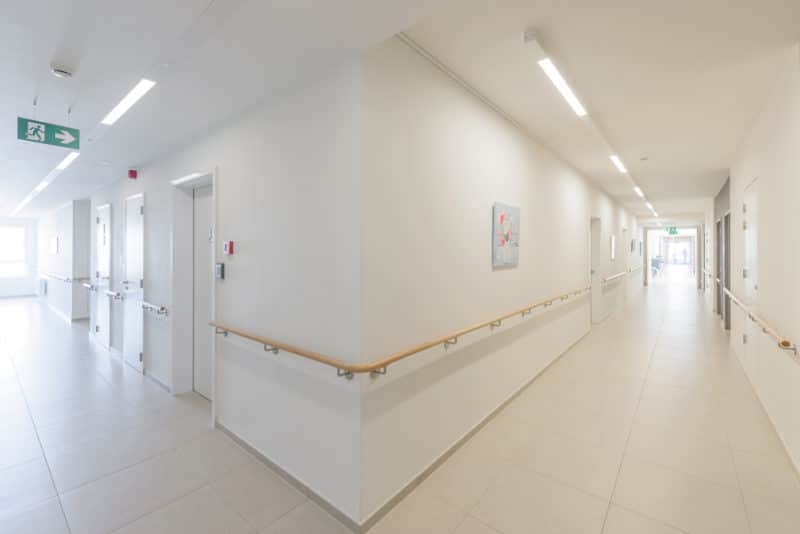
Many old buildings of companies, public services, schools, healthcare facilities, etc. still use outdated lighting systems. In most cases, it pays off to make modifications (refitting) or even replace the luminaires (relighting). Relighting and refitting not only save a considerable amount of energy, but also ensure a healthier (working) environment with more comfort.
Due to the increasing and unpredictable energy costs, it is definitely profitable to take a critical look at your lighting systems. Relighting and refitting are interesting options for owners of older buildings, who want to save on energy costs and CO2 emission.
Significant energy saving with LED lighting
Since the late 1990s, LED lighting has been on the market for everyday use. Since then, fluorescent lamps and other similar lamps are disappearing from the street scene. LED lighting is incredibly efficient in comparison to older technologies. The switch provides significant cost savings. Maintenance costs also decrease, thanks to the long life expectancy of LED lighting.
In 2023, owners of non-residential buildings can still benefit from premiums for investments in energy-efficient interior lighting.
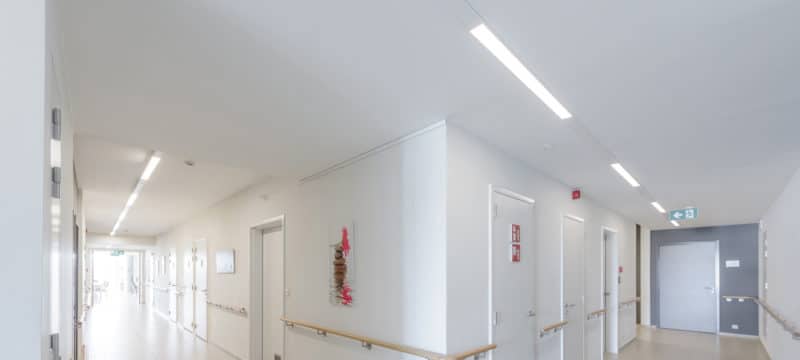
Relighting or refitting?
To install LED lighting in an older building, you can opt for refitting or relighting. Most of the time, you don’t really have a choice between the two options, as the situation determines the most logical option. Sometimes you have to make do with what you have.
In some buildings, relighting is not possible due to the limitations of the infrastructure. In other cases, refitting is not possible because too many components are worn-out.
The (lighting) technical construction of the luminaire also determines whether or not the
lighting systems can be replaced in their entirety. Even if the budget is limited, refitting can be a better option than relighting and still achieve the intended cost reduction. After all, refitting gives the components a new life, which fits perfectly in the picture of circular lighting in a circular economy.
Consider lighting comfort as well
In addition to saving energy, there are numerous other reasons to install LED lighting. For example, LED immediately provides full light output upon activation. A fluorescent lamp, on the other hand, ignites slowly. So motion sensors only make sense with LED lighting.
Just think of a small storage room or passageway, where you quickly need light for just a short amount of time. Relighting enables optimization with DALI (daylight) lighting control and Human Centric Lighting for a healthy (working) environment.

Do you need advice for your own project?
For each project, our lighting architects make a lighting study to calculate the savings potential and payback period. That way, we can find a solution together that pays off as quickly as possible.
Contact us for advice about the lighting for your building and its installation.
Looking for inspiration?
Do you have questions? Would you like more information about our products?
Contact usMore news
-

Light lines connecting old and new at WeForm group practice
In the heart of Herselt, a traditional house was thoroughly renovated and extended to create a group practice. With the architectural concept “The Shadow”, a new composition emerged in which the new volume appears to embrace the old one. Multiline delivered the lighting design and produced a bespoke architectural lighting solution.
Read more -

“As a lighting architect, you bring technology and aesthetics together”
As a lighting architect, Lieze translates the plans and ambitions of clients, architects and engineering consultancies into lighting proposals that are both technically sound and aesthetically refined. That is why she values an environment in which quality comes first. “The best thing about my job? The variety. Because so much of our work is bespoke, no two days are ever the same.” In this blog, she explains why she is so proud of her work at Multiline.
Read more -
How does Multiline design bespoke lighting for projects?
A luminaire that integrates naturally into the ceiling rhythm, with a precise finish and light output perfectly tailored to the space… The result often appears self-evident. Yet behind the scenes, bespoke lighting for projects is considered down to the millimetre. In this blog, you will discover how we at Multiline design custom solutions that fully align with both the architectural concept and on-site execution.
Read more