 blog
blog New product Offside: ease of installation at its finest
Built for speed. Speed of installation, more specifically. Meet the Offside: “Of all our products, it is the easiest to install”, says managing director Klaus Rahne. “Ideal for projects where things have to move fast.”
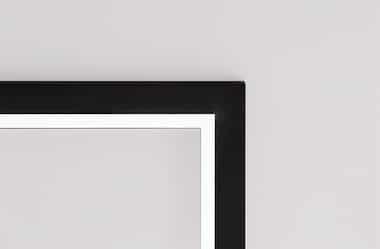
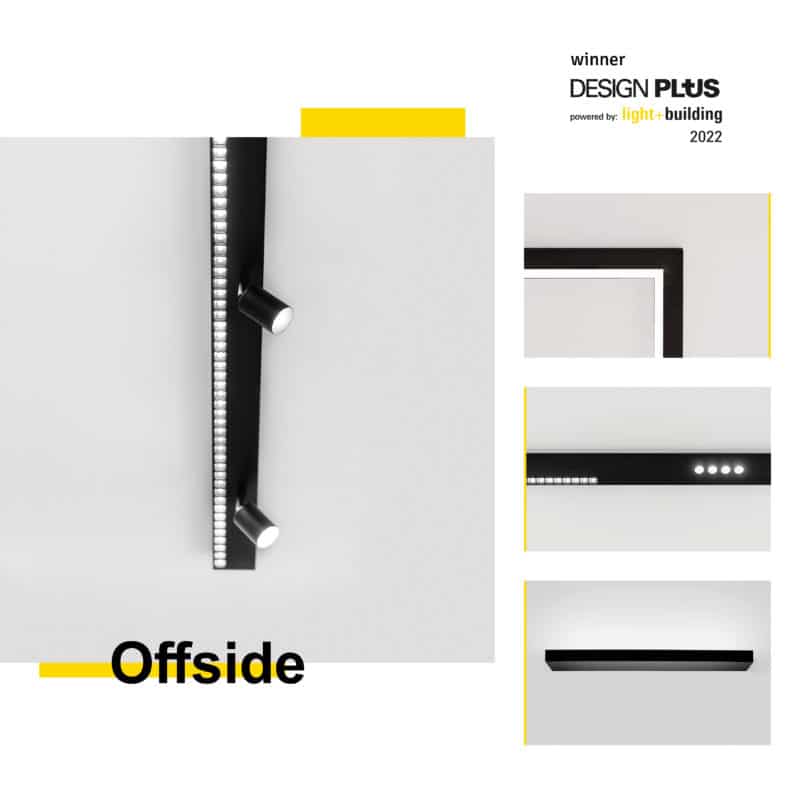
Just like the Grip, the Offside was also designed by product designer Stan Maes. Once again, the idea was clear: to develop an elegant and slim line of light.
Yet there is an important difference between the two new profiles. “We took a more aesthetic approach for the Grip, with an emphasis on creativity. For Offside, we put the focus on the ease of installation,” Klaus explains.
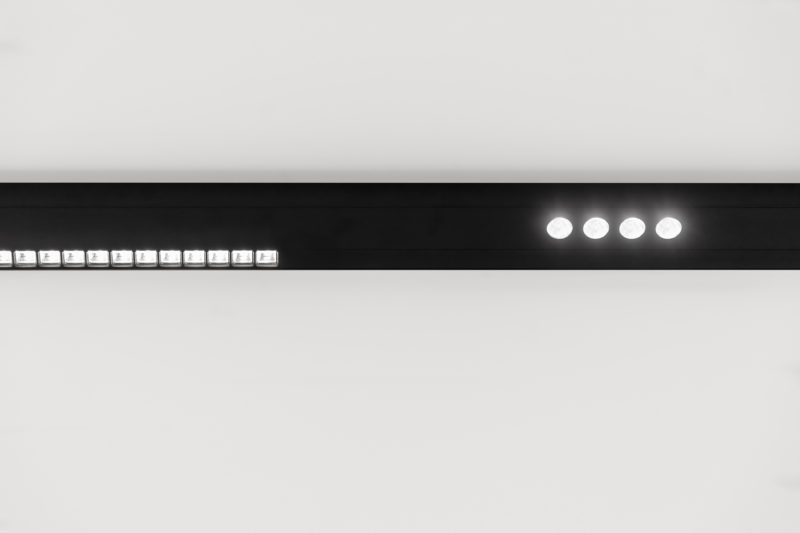
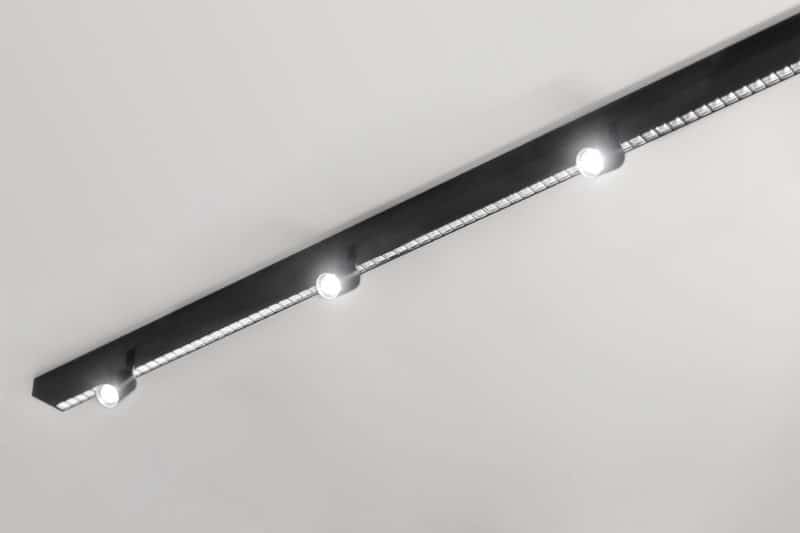
“Still, I believe there is so much more to the Offside than just its technical strengths. It has become a very beautiful and versatile product. By playing with colour and different light combinations, there are enough possibilities to tailor it to the needs of your project or to apply it as a simple wall fixture.
Ease of installation
But still: the technical aspect prevails. “Our customers demand lighting solutions that are quick to install. In the public procurement market, such as hospitals and residential care centres, but also in offices, it’s all about making meters. A typical feature of these projects is the huge number of long light lines. The Offside is our response to that demand.”
“For all our designs, we pay special attention to the ease of installation. With Offside, we now go a step further. With most light profiles, as an installer you have to remove the LED modules in addition to the diffuser so that the power supply and mounting holes are accessible.
Immediately mountable
“This is not the case with the Offside. When mounting this profile, you only need to pull the infill panel out by using the supplied tab, which is already glued around the infill panel. If you remove the tab, you will see the mounting holes and a free cable passage. This method avoids contact with the LED modules and eliminates the risk of damaging the electrical components. In other words, there is no need to dismantle anything. Mount the profile, connect the power supply, if necessary mechanically link it with the next profile, pull the wiring through and you’re done. The Offside is available in up to six meters in one piece.
So far the explanation for the meters. Next, Klaus also delves a bit deeper into the beautiful features of the product. “The Offside is developed for surface- and wall-mounting. With a width of barely six cm and a height of three cm, the end result looks slim and light. It barely protrudes from the ceiling. That’s why I don’t only see it being used in corridors, but also in offices as individual light lines with a louvre optic (UGR<19)”.
Looking for inspiration?
Do you have questions? Would you like more information about our products?
Contact usMore news
-

Light lines connecting old and new at WeForm group practice
In the heart of Herselt, a traditional house was thoroughly renovated and extended to create a group practice. With the architectural concept “The Shadow”, a new composition emerged in which the new volume appears to embrace the old one. Multiline delivered the lighting design and produced a bespoke architectural lighting solution.
Read more -

“As a lighting architect, you bring technology and aesthetics together”
As a lighting architect, Lieze translates the plans and ambitions of clients, architects and engineering consultancies into lighting proposals that are both technically sound and aesthetically refined. That is why she values an environment in which quality comes first. “The best thing about my job? The variety. Because so much of our work is bespoke, no two days are ever the same.” In this blog, she explains why she is so proud of her work at Multiline.
Read more -
How does Multiline design bespoke lighting for projects?
A luminaire that integrates naturally into the ceiling rhythm, with a precise finish and light output perfectly tailored to the space… The result often appears self-evident. Yet behind the scenes, bespoke lighting for projects is considered down to the millimetre. In this blog, you will discover how we at Multiline design custom solutions that fully align with both the architectural concept and on-site execution.
Read more